
The global semiconductor shortage hit passenger vehicle sales in September, with major manufacturers like Maruti Suzuki, Hyundai and Mahindra & Mahindra reporting a decline in sales on Friday. Kia India and Honda Cars also reported a dip in wholesales last month as compared with the year-ago period. Carmakers like Tata Motors, Toyota Kirloskar Motor, Nissan and Skoda, however, reported an increase in passenger vehicle dispatches last month despite supply chain issues.
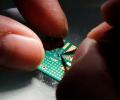
Leading microchip providers Qualcomm and Intel say the chip shortage might last anything between four months to a year, perhaps even two years, depending on the various product categories - mobile devices, ICE, electric vehicles, appliances, data centres. Prakash Mallya, MD, Intel India and vice president, sales and marketing and communications group, said the spike in demand was huge, and cut across segments from PCs, phones, appliances and auto leading to the shortage.

In light of the recent incidents involving scooters from prominent electric mobility brands bursting into flames, the subject of electric vehicle (EV) safety has come under the spotlight. As many as 20 electric scooters of Nashik-based Jitendra EV Tech caught fire after being loaded on a transport container. While no one has been reported injured, the company said it is conducting an investigation to find the 'root cause' of the fire.

The Sensex finished above the psychologically key 60,000-mark while the Nifty surged past the 18,000-level on Monday on across-the-board buying amid a mixed trend overseas. A depreciating rupee and concerns over the US Federal Reserve hiking rates later this week failed to quell investors' appetite for stocks, traders said. The 30-share BSE Sensex rallied 786.74 points or 1.31 per cent to settle at 60,746.59.

Cumulative sales of India's top passenger vehicle makers -- Maruti Suzuki, Mahindra and Mahindra, Tata Motors, Honda Cars, and Toyota Kirloskar -- increased to 206,418 units in February over 200,322 units in the same month last year, an increase of 3 per cent.

Equity indices gave up early gains to close in the red for the third session on the trot on Wednesday, weighed by selling in banking and finance counters amid inflationary pressures and persistent foreign fund outflows. A weak rupee and lacklustre global cues also kept buying sentiment in check, traders said. The 30-share BSE Sensex opened on a firm footing but failed to hold on the momentum, finishing 237.44 points or 0.41 per cent lower at 58,338.93. On similar lines, the broader NSE Nifty dipped 54.65 points or 0.31 per cent to close at 17,475.65.

'It is critical that the Covid curve does not have a fat tail and the chain is broken quickly.'
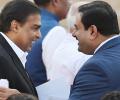
Oil-to-telecom conglomerate Reliance Industries (RIL) has emerged as the country's largest wealth creator, adding a staggering Rs 9.6 trillion over the past five years, according to Motilal Oswal's 26th Annual Wealth Creation Study. In doing so, the Mukesh Ambani-led company has beaten its own record of Rs 5.6 trillion generated in 2014-19. The study covered financial year 2015-16 (FY16) to FY21 and ranks the top 100 companies in descending order of absolute wealth created, subject to the company's stock price outperforming the BSE Sensex. The firms were also ranked according to speed (price CAGR during the period).

Automobile dealers' body FADA on Tuesday expressed concern that the chip shortage issue could derail passenger vehicle (PV) retail sales during the festive season, as automakers are struggling with an adequate supply of vehicles to dealers due to production challenges. Terming semiconductor shortage as a "full-blown crisis", the industry body warned of a lacklustre festive season, especially for the passenger vehicle dealer fraternity, with low inventory levels and non-availability of the fast-moving model variants ahead of the peak festive period.

For automakers, the festive season is about raking it in through ramped up sales and attractive consumer offers. However, despite the robust demand, what may spoil the party this year is a global shortage of semiconductors.

Metal prices from copper to aluminum and tin have shot up by about 7-32 per cent in the past three months.
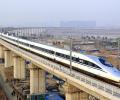
The National High Speed Rail Corporation Limited has invited bids for the design and construction of an underground station at Mumbai's Bandra Kurla Complex and for a tunnel for the bullet train project, Railway Minister Ashwini Vaishnaw said on Friday. This is the first set of bids invited after the rebel Shiv Sena leader Eknath Shinde-led government came to power in Maharashtra. The new government has given the green light to the project, which remained dormant during the erstwhile Uddhav Thackeray-led dispensation.

Equity indices nursed losses for the second consecutive session on Tuesday as investors continued to dump IT, banking and FMCG stocks amid a bearish trend in global markets. Unabated foreign fund outflows and the rupee dropping to another record low against the US dollar added to the woes, traders said. Participants were also in wait-and watch mode ahead of release of retail inflation and factory output data.
Titan was the top gainer in the Sensex pack, rising around 4 per cent, followed by HDFC, Nestle India, IndusInd Bank, UltraTech Cement and Bharti Airtel. On the other hand, Bajaj Auto, Tata Steel and NTPC were the laggards.

Benchmark indices ended on a flat note on Thursday as fag-end selling wiped out intra-day gains amid weak global trends. The BSE benchmark Sensex slipped 8.03 points or 0.02 per cent to settle at 53,018.94. During the day, it had gained 350.57 points or 0.66 per cent to 53,377.54. Similarly, the broader NSE Nifty fell 18.85 points or 0.12 per cent to close at 15,780.25.

'Investors should continue to invest because you are looking at the long-term; in the next four to five years, we are bound to outperform (the rest of the world equity markets).'

The new car market is estimated at around 30,000 units a year in sales in a good year, whereas the used car market for luxury vehicles is estimated at around 60,000 cars annually.

Equity indices chalked up losses for the second straight session on Monday, in tandem with a bearish trend overseas as ratcheting up of hostilities in Ukraine and prospects of further rate hikes by the US Fed soured global risk sentiment. The rupee slipping to another all-time low against the US dollar amid foreign fund outflows added to the gloom, traders said. After tumbling over 800 points in intra-day trade, the 30-share BSE Sensex clawed back some lost ground to end 200.18 points or 0.34 per cent lower at 57,991.11.
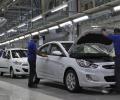
The country's leading automakers Maruti Suzuki and Hyundai Motor reported a decline in dispatches to dealers in March as shortage of electronic components impacted production. On the other hand, Tata Motors, Skoda and Kia India posted their highest ever monthly wholesales last month. Toyota Kirloskar Motor said its dispatches in March were the highest in the last five years while Mahindra & Mahindra also reported a robust increase in its passenger vehicle dispatches in March.
The BSE Sensex maintained its winning run for the fourth session on the trot on Wednesday to reclaim the 60,000-level after a gap of over four months as investors remained upbeat amid softening crude oil prices and persistent foreign fund inflows. A strengthening rupee and positive Asian markets further bolstered sentiment, traders said. The 30-share BSE benchmark jumped 417.92 points or 0.70 per cent to settle at 60,260.13 -- closing above the psychologically key 60,000-mark for the first time since April 5 this year.
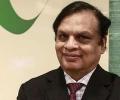
Starting with a family, which had a dealership of Bajaj Auto's scooters, to becoming the owner of a household name in consumer appliances who could afford to have Bollywood superstar Shah Rukh Khan as the brand ambassador, Venugopal Dhoot's is a story of an aggressive small town businessman's pursuit to be on the top. Now arrested in connection with the ICICI Bank loan fraud case, Venugopal Dhoot during his heydays was not the one to simply sit on small achievements like Videocon becoming the largest television set manufacturer in India.

Equity investors became richer by over Rs 7.21 lakh crore as stock markets continued the rally for the second day on Wednesday. The 30-share BSE Sensex opened in the green on Wednesday and further jumped 1,469.64 points or 2.75 per cent to 54,893.73 during the day. It finally settled at 54,647.33, higher by 1,223.24 points or 2.29 per cent amid reports of diplomatic efforts to end Russia's attack on Ukraine. On Tuesday, it settled at 53,424.09, higher by 581.34 points or 1.10 per cent.

'It is going to be a buyers' market and you will get a good number of companies at reasonable valuations and that's when one has to be very greedy.'
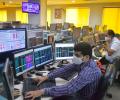
The Fed interest rate decision, domestic macroeconomic data announcements and quarterly earnings will be the major sentiment drivers for the equity market in a holiday-shortened week ahead, analysts said. Investors will also take cues from the monthly auto sales numbers to be announced on Monday. Equity markets will remain closed on Thursday for Diwali Laxmi Pujan and on Friday for Diwali Balipratipada.

Experts say a combination of improving asset quality and NBFCs' weak balance-sheets bodes well for both corporate and retail banks.

The 30-share BSE benchmark jumped 533.74 points or 0.91 per cent to 59,299.32. During the day, it zoomed 783.24 points to 59,548.82.
ONGC was the top loser in the Sensex pack, shedding 4 per cent, followed by Bharti Airtel, SBI, IndusInd Bank, NTPC, Sun Pharma and ITC. On the other hand, Bajaj Finance, Bajaj Auto, Reliance, Bajaj Finserv and Asian Paints were among the gainers.

Bajaj Finserv was the top loser in the Sensex pack, shedding around 3 per cent, followed by Bajaj Auto, Bajaj Finance, L&T, Asian Paints, Dr Reddy's, ICICI Bank, HDFC Bank and RIL. NSE Nifty finished 101.45 points down at 14,929.50.
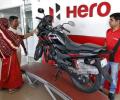
Besides regular buyers, there is lot of interest among those in essential services, such as health, banking, and IT. The sales will be helped by social distancing becoming the new normal in both urban and rural regions as people will be averse to using public transport.

Diesel rates had gone up by Rs 12.55 a litre between June 7, when oil firms resumed revising prices in line with cost, and July 25.

Equity benchmark Sensex rebounded 454 points on Thursday, boosted by gains in index heavyweight Reliance Industries amid a positive trend in global markets.

'Returns can be very variable in equity markets.' 'That is why I tell small investors don't put 100 per cent of your money in equities, even if you are young.'

'This fall is nothing. We could see worse if everybody hits the panic button.'
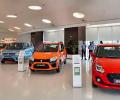
Ratings agency ICRA on Wednesday revised downwards growth forecast for the domestic passenger vehicles industry to 8-11 per cent in the ongoing fiscal from the earlier estimate of 14-17 per cent on account of the ongoing semiconductor shortage. Similarly, for the two-wheeler segment, it said the volumes are expected to contract by 1-4 per cent in FY2022 against an earlier prediction of 6-8 per cent growth as affordability and demand sentiments of target clientele was hit sharply by the second wave of COVID-19 pandemic. With around 5 lakh units of production lost by various automakers in the passenger vehicles segment due to the semiconductor shortage, ICRA said the earnings loss for the OEMs (Original Equipment Manufacturers) could be around Rs 1,800 crore to Rs 2,000 crore for the ongoing fiscal.

Petrol and diesel price on Sunday was hiked again by 35 paise a litre and the auto fuels now cost a third more than the rate at which ATF is sold to airlines. The fourth straight day of 35 paise per litre hike sent petrol and diesel rates to record highs across the country. The price of petrol in Delhi rose to its highest-ever level of Rs 105.84 a litre and Rs 111.77 per litre in Mumbai, according to a price notification of state-owned fuel retailers.

Macroeconomic data announcement, Omicron situation and global trends will be the major driving factors for the equity market in the first week of the new year 2022, according to analysts. In what turned out to be a historic year, the Indian stock indices went past multiple milestones and the 30-share Sensex made an annual gain of 10,502.49 points or 21.99 per cent in 2021. Religare Broking Vice-President (Research) Ajit Mishra said, "This week marks the beginning of a new month and participants will be closely eyeing some crucial high-frequency data like monthly auto sales, India manufacturing PMI and India services PMI. "Besides, updates on the COVID-19 situation and performance of global markets will also be critical."

Govt's move will facilitate entry of global giants such as Total SA of France, Saudi Arabia's Aramco, BP Plc of the UK, and Trafigura's downstream arm Puma Energy.

Maruti Suzuki, Hyundai and Tata Motors reported their highest-ever dispatches to dealers last fiscal, enabling the domestic passenger vehicle industry to log in best-ever performance to date. The country's largest carmaker Maruti Suzuki India reported its highest wholesales to date at 19,66,164 units, up 19 per cent from 16,52,653 units in 2021-22. Its domestic dispatches rose to 17,06,831 units in 2022-23, up 21 per cent from 14,14,277 units in 2021-22 fiscal.Hyundai Motor India said its overall wholesales last fiscal were the highest ever since commencing operations in the country.
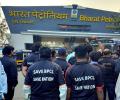
The divestment of Bharat Petroleum Corporation (BPCL) may hit a fuel price hurdle, according to officials dealing with the matter. They pointed out that the inconspicuous administered price regime could hamper the prospects for potential buyers of BPCL. A senior oil ministry official said public-sector oil-marketing companies (OMCs) take a hit when they sell petrol, diesel, and liquefied petroleum gas (LPG), three of the most popular petroleum products in the country.

'Approach people with respect, mindful that they know their job better than you do, and that you're not superior to them just because you may be better educated or their boss.' Skoda Auto VW India MD Gurpratap S Boparai cites his management credo to Pavan Lall.
